

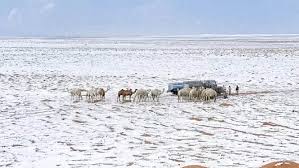
DUBAI: Rare snowfall in Saudi Arabia happens due to a combination of unusual atmospheric conditions, and it is becoming slightly more frequent because of climate variability.
Snow in Saudi Arabia is rare because the country is usually hot and dry.
However, when cold air, moisture and elevation come together, especially during winter, it can snow, even in a desert nation.
Here’s a clear explanation:
Influx of cold air masses
Occasionally, very cold air from Europe or Central Asia moves southward into the Middle East. When this cold air reaches northern and central Saudi Arabia—especially elevated areas—it can cause temperatures to drop to near or below 0°C, which is necessary for snow.
Presence of moisture
Snow cannot form without moisture. When these cold air masses interact with rain-bearing clouds or low-pressure systems, precipitation occurs. If temperatures are low enough, the rain falls as snow instead of rain.
Higher elevation areas
Snowfall in Saudi Arabia usually occurs in mountainous or elevated regions like Tabuk, Hail, or areas north of Riyadh. Higher altitude means cooler temperatures, making snow more likely there than in low-lying deserts.
Climate change and weather variability
Climate change does not just mean rising temperatures—it also leads to more extreme and unpredictable weather.
This increases the chances of unusual events such as:
Snow in desert regions
Heavy rain in typically dry areas
Sudden temperature drops
Seasonal winter systems
During winter, Mediterranean weather systems can extend into the Arabian Peninsula. When combined with cold air, these systems can trigger rare winter phenomena like snowfall.