

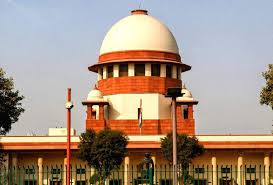
NEW DELHI: Questioning the legal status of Rohingyas living in India, the Supreme Court on Tuesday wondered if intruders should be given a red carpet welcome while the country’s own citizens faced poverty and resource crunch.
“If they do not have legal status to stay in India, and you are an intruder, we have a very sensitive border on the north India side. If an intruder comes, do we give them a red carpet welcome, saying we would like to give you all facilities? What’s the problem in sending them back?” a Bench led by Chief Justice of India Surya Kant and Justice Joymalya Bagchi asked.
The top court made these comments while hearing a petition alleging disappearance of five Rohingya immigrants detained by the authorities.
“First you enter, you cross the border illegally. You dig a tunnel or cross the fence and enter India illegally. Then you say, now that I have entered, your laws must apply to me and say, I am entitled to food, I am entitled to shelter, my children are entitled to education. Do we want to stretch the law like this?” the Bench asked.
Petitioner Rita Manchanda’s counsel submitted that certain Rohingyas ‘refugees’ were picked up by Delhi Police in May and there was no information about their whereabouts. She talked about the top court’s 2020 order requiring the authorities to deport Rohingyas only according to procedure.
“Where is the order of the Government of India declaring them (Rohingyas) as refugees? ‘Refugee’ is a well-defined legal term and there is a prescribed authority by the Government to declare them. If there is no legal status of a refugee and somebody is an intruder and he enters illegally, do we have an obligation to keep that fellow here?” the Bench asked.
“We also have poor people in the country. They are citizens. Aren’t they entitled to certain benefits and amenities? Why not concentrate on them? It is true, even if somebody has entered illegally, we should not subject them to third-degree methods. But asking for a writ of habeas corpus to bring them back!” the CJI Kant wondered.
Solicitor General Tushar Mehta pointed out that the petition had not been filed by an affected person and that the petitioner had no locus standi to move the top court. “A PIL petitioner who has nothing to do with Rohingyas is asking these prayers,” Mehta submitted.
Noting that the matter will be taken up along with similar connected petitions, the Bench deferred the hearing to December 16.
While hearing a petition alleging the Indian authorities of dropping 43 Rohingyas, including women and children, in the Andaman sea for deportation to Myanmar, the top court had on May 16 said, “When the country is passing through a difficult time, you come out with fanciful ideas.”
Refusing to stay deportation of Rohingya refugees, it had questioned the authenticity of the material placed before it by petitioner Mohammad Ismail and others.
On May 8, the top court had said if Rohingyas were found to be foreigners under Indian laws, they would have to be deported. It had then referred to its earlier order and remarked that the identity cards issued by the United Nations High Commissioner for Refugees (UNHCR) may not be of any help to them under the law.
On July 31, the top court had said the first major issue to be decided was if Rohingyas were refugees or illegal entrants.
“Whether Rohingyas are entitled to be declared as refugees? If so, what protections, privileges or rights are they entitled to,” it asked.
If they were not refugees and were illegal entrants, if the action of the Centre/states in deporting them was justified.
“Even if the Rohingyas have been held to be illegal entrants, can they be detained indefinitely or they are entitled to be released on bail, subject to such conditions as the court may deem fit to be imposed,” it asked.
The other issue raised in the petitions was if the Rohingyas detained had been provided basic amenities like drinking water, sanitation and education.
“If the Rohingyas are illegal entrants, whether the government of India and the states are obligated to deport them in accordance with law,” it had said.