

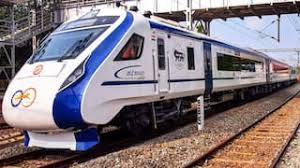
Coach capacity increased from 8 to 20; train to halt at 7 stations; journey time around 5 hours; over 1,440 passengers to travel at once
SRINAGAR: The much-awaited Jammu–Srinagar direct train service will commence from March 1, reducing travel time between the two capital cities to around five hours, officials said on Tuesday.
An official told the news agency—Kashmir News Observer (KNO) that the Vande Bharat train service will operate between Jammu and Srinagar from March 1 and will halt at seven stations along the route.
Earlier operating with eight coaches, the train will now run with 20 coaches from March 1, enhancing passenger capacity and convenience.
The Vande Bharat train service, inaugurated by Prime Minister Narendra Modi at Katra on June 6, 2025, is currently operational between Srinagar and Katra only.
The launch of the Jammu–Srinagar service had been delayed due to ongoing construction work at the Jammu Railway Station, where infrastructure upgrades and expansion were underway to accommodate increased passenger traffic and advanced train operations.
The service forms part of the prestigious 272-km Udhampur–Srinagar–Baramulla Rail Link (USBRL) project aimed at providing seamless rail connectivity to the Kashmir Valley.
Declared a ‘national project’ in 2002, the USBRL project has faced numerous engineering and geological challenges. It includes landmark infrastructure such as the Chenab Rail Bridge—the world’s tallest railway bridge—along with several long tunnels.
The new connectivity is expected to give a boost to tourism, trade, and local economic activity in J&K.
Senior Divisional Commercial Manager Uchit Singhal said, “Keeping in view the growing demand and convenience of passengers, the Railways has decided to extend the Vande Bharat train and increase its capacity to provide better connectivity. The train will travel from Jammu to Srinagar in approximately 4 hours and 55 minutes. Earlier, with eight coaches, it could carry around 530 passengers. With 20 coaches, over 1,440 passengers will now be able to travel at once.”