

Study mandated on Chenab basin for environmental flows, biodiversity and community concerns
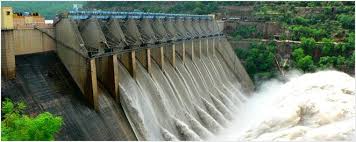
SRINAGAR: In a significant move, the Expert Appraisal Committee (EAC) under the Union Ministry of Environment, Forest and Climate Change has recommended environmental clearance for Dulhasti hydroelectric project stage-II.
The EAC, as per news agency—Kashmir News Observer (KNO) recommended environmental clearance for 260 MW Dulhasti stage-II hydroelectric project during its meeting held on December 19, 2025, The proposed project is the extension of 390 MW operational Dulhasti Stage-I hydroelectric project, which was commissioned in 2007 and has been operating successfully since then.
The National Hydroelectric Power Corporation entered into a Memorandum of Understanding (MOU) with Government of Union Territory of Jammu and Kashmir on January 03, 2021, for execution of Dulhasti Stage-II hydroelectric project on Build-own-Operate-Transfer (BOOT) basis for a period of 40 years on Chenab river in Kishtwar district.
The estimated project cost is Rs 3277.45 crore. Of this, Rs 4564.57 lakh has been kept for the Environment Management Plan (EMP) and pollution control measures.
While recommending environmental clearance, the EAC directed that a study should be undertaken five years after commissioning of the project to assess its impact on the environment. “After 5 years of the commissioning of the project, a study shall be undertaken regarding the impact of the project on the environment. The study shall be undertaken by an independent agency,” reads the record note of the meeting.
It also directed NHPC and Chenab Valley Power Projects Limited (CVPPL) to undertake a study, through a reputed government research institute, to formulate a strategy for sustainable environmental management of the Chenab River Basin. The study will cover aspects such as scientifically robust environmental flow regimes, restoration and maintenance of channel morphology and sediment processes, protection and conservation of aquatic and riparian biodiversity, livelihood and community concerns, and integration of Marusudar River management within the Chenab basin cascade framework.