

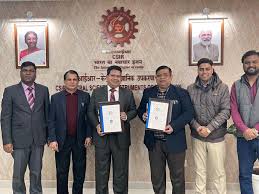
NEW DELHI: The Defence Institute of Physiology and Allied Sciences (DIPAS), a Delhi-based laboratory under the Defence Research and Development Organisation (DRDO), has joined hands with the Central Scientific Instruments Organisation (CSIO), Chandigarh, to advance collaborative research in defence life sciences.
The partnership will focus on the indigenous development of sensor technologies, particularly wearable devices for real-time physiological monitoring of defence personnel operating under varied environmental and service conditions.
Joint research will also examine how changing environmental conditions such as extreme temperatures, high altitude and hypoxia affect soldiers’ cognitive performance and decision-making abilities.
Beyond deployments on the ground, studies by the two institutes will further explore the impact of air operations in high-altitude on pilots’ judgment, reaction time and overall mission effectiveness.
According to defence sources, sustained military deployment in extreme high-altitude areas became the new normal after the protracted stand-off with China along the Line of Actual Control (LAC) in 2020. This, sources said, gave unprecedented impetus to research and development for supporting troops in such conditions.
Besides ensuring the human efficiency, endurance, safety and well-being of troops, the Armed Forces must maintain uninterrupted logistic support and keep weapons and equipment in working condition.
Following the 2020 standoff, India undertook an unprecedented level of military deployment. Over 68,000 soldiers, around 90 tanks, 330 BMP infantry combat vehicles, radar systems, artillery guns and other equipment were inducted.
Additionally, the Indian Air Force deployed its fighters, attack helicopters and surveillance aircraft to bolster defence capabilities. Prior to this, the estimated troop strength along the LAC was 10,000, sources said.
“The collaboration aims to strengthen joint research and development, promote translational innovation and support the development of mission-critical technologies tailored to operational defence environments,” a statement by CSIO read.
CSIO, a constituent laboratory of the Council for Scientific and Industrial Research (CSIR), is involved in the research, design and development of scientific and industrial instruments. It has been closely associated with projects for the armed forces involving sensors and electro-optics.
DIPAS undertakes physiological and biomedical research to improve the performance and well-being of soldiers deployed in harsh conditions like deserts and high altitudes. Its areas of work include military physiology, life support systems, ergonomics, clinical and cellular biochemistry, anthropometric data compilation, nutrition man-machine interface and occupational health.