

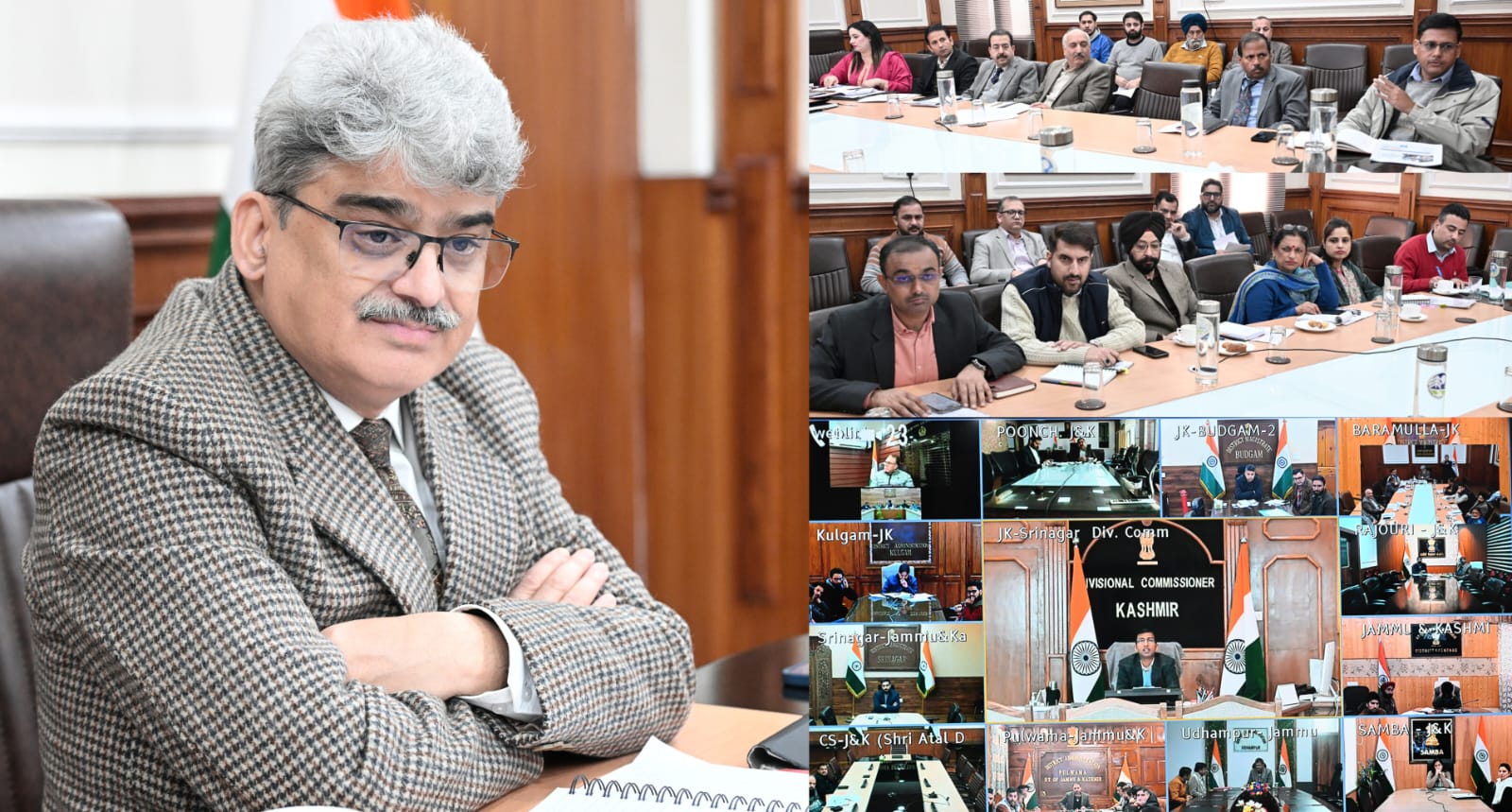
JAMMU: Chief Secretary, Atal Dulloo today while chairing the meeting to review the proposed measures and action plans for enhancing disaster preparedness and mitigation across J&K stresses on taking expert guided measures to alleviate their impact here in the UT.
The meeting was attended by the Additional Chief Secretary, Public Works Department; Principal Secretary, DMRR&R; Divisional Commissioner, Jammu/Kashmir; Secretary, Rural Development Department; DG, Codes; and other senior officers.
Deputy Commissioners participated through video conferencing.
The Chief Secretary emphasised that disaster mitigation is a critical responsibility that directly concerns safeguarding human lives and public assets. Stressing that disasters strike without warning, he called for a proactive approach grounded in scientific assessment and timely preparation.
He directed the Department to constitute a team of domain experts to undertake a comprehensive vulnerability study and recommend both short and long-term interventions tailored to the region’s unique risks. He added that well-informed, evidence-backed strategies would significantly strengthen the UT’s ability to minimise the impact of natural disasters.
To further enhance technical readiness, the Chief Secretary stresses on engagement with premier national organisations including the Archaeological Survey of India (ASI), Central Water Commission (CWC), Central Building Research Institute (CBRI), and Geological Survey of India (GSI). He noted that expert guidance from such agencies would be crucial in refining structural and non-structural mitigation measures and building institutional capacityin J&K.
During the meeting, the Additional Chief Secretary, PWD, stressed the importance of capacity building for departmental personnel through specialised professional institutions to ensure readiness during emergencies.
Principal Secretary, DMRR&R, highlighted the added value of having collaboration with the UNDP and outlined the progress made so far in strengthening the UT’s disaster management framework. He noted that inputs from field experts and frontline agencies would be incorporated into forthcoming plans, underscoring the need for a whole-of-government approach for effective implementation.
Both the Divisional Commissioners of Jammu and Kashmir divisions drew attention to region-specific vulnerabilities and recommended that area-specific priorities be integrated into the overall strategy to ensure comprehensive and grounded planning.
Deputy Commissioners also shared district-level insights and highlighted the roles of District Disaster Management Authorities (DDMAs) in strengthening preparedness at the grassroots.
Earlier, the meeting was presented with a detailed overview of J&K’s vulnerability to disasters such as earthquakes, floods, landslides, cloudbursts, flash floods, and Glacial Lake Outburst Floods (GLOFs).
The presentation outlined the need for both structural measures including resilient infrastructure and safety retrofitting and non-structural initiatives such as improved governance, awareness campaigns, and regulatory reforms.
The discussions also covered administrative and legislative steps required to strengthen institutional response, with special focus on advanced early warning systems, integration of climate change considerations, and development of risk-transfer mechanisms to protect public lives and assets in the long run during such trying circumstances here in J&K.