

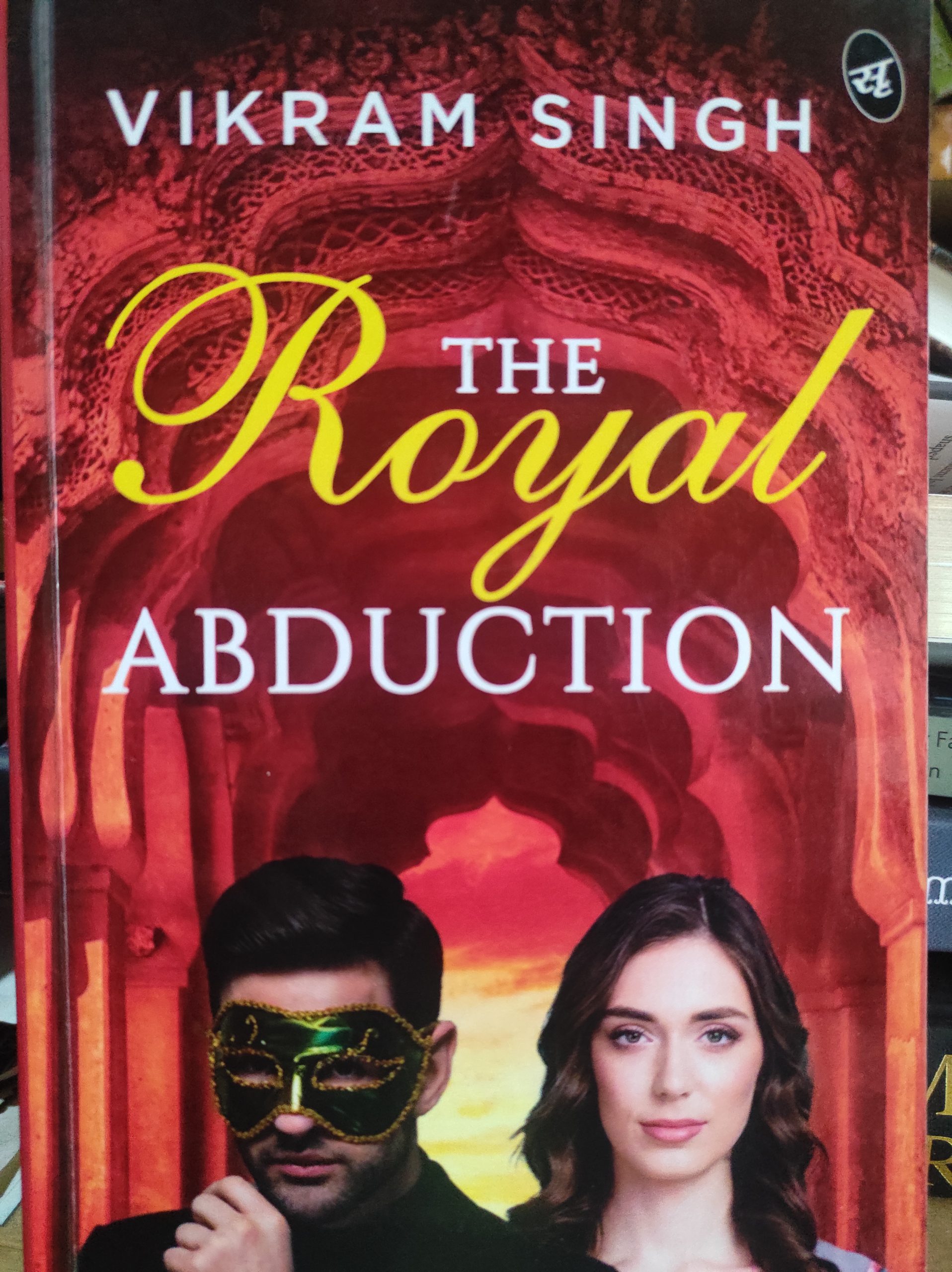

Vikram Singh’s The Royal Abduction is a tightly wound, fast‑paced thriller that marries royal intrigue, psychological tension, and a high‑stakes kidnapping plot into a compact yet gripping narrative. The novel moves swiftly across Rajasthan’s historic landscapes while juggling multiple storylines—romance, revenge, media spectacle, and a doppelgänger mystery—so that the reader is rarely allowed to pause and catch breath. What emerges is less a conventional whodunit and more a psychological chess game between a brilliant, vengeful abductor and a constellation of characters whose lives are unexpectedly entangled with a kidnapped princess.
Plot outline and narrative structure
At the heart of the novel is the abduction of Shreya Singh, a young princess from a Rajasthan royal house, whose disappearance triggers a nine‑day countdown of clues, riddles, and media frenzy. The kidnapper, who calls himself “Romeo,” does not seek ransom but instead appears driven by a deeper, more personal grievance against the royal family, using the princess as both a symbol and a weapon. Parallel to this is the story of Sid, a startup‑founder who has come to Jaipur to surprise his girlfriend, Neha, only to discover that Shreya bears an uncanny resemblance to her—launching a second, parallel mystery about identity and coincidence.
The narrative is structured as a series of converging arcs:
- The princess and her abductor, Romeo, in a cat‑and‑mouse game across Rajasthan’s heritage sites.
- Sid and his dog Masha, whose personal search for Neha increasingly overlaps with the search for Shreya.
- Prabal Mishra, a seasoned crime journalist, who treats the case as both a professional challenge and a chance to outpace the police.
This multi‑thread structure keeps the pace brisk, but it also allows Singh to alternate between claustrophobic scenes inside the princess’s captivity and wider, almost cinematic set‑pieces in forts, palaces, and desert towns. The reader is constantly shuttled between the intimate terror of Shreya’s confinement and the sprawling public drama that unfolds in newsrooms, police stations, and royal drawing rooms.
Character dynamics and emotional core
The emotional core of the novel, however, extends beyond Shreya’s physical captivity and into a secondary, more tragic love story involving Piya, Ram, and Jaidev Singh. Piya is engaged to Ritu’s brother, but she is in love with Ram, creating a classic triangle of duty, desire, and social expectation. Jaidev Singh, a powerful figure who desires Piya for himself, becomes an antagonist not through overt villainy but through the weight of his status and the pressure he exerts on the community.
In a dramatic and symbolic climax, Piya chooses to commit sati before the Goddess Kali, an act that is portrayed less as romantic idealization and more as a desperate assertion of agency within a rigid social order. Ram, unable to live without her, follows her into death, underscoring the novel’s preoccupation with love as both redemptive and destructive. These episodes, though set apart from the main kidnapping plot, function as a dark counterpoint to the “romantic” figure of Romeo: where Romeo uses love and obsession as instruments of revenge, Ram and Piya turn love into a final, fatal vow.
The contrast between these two relationships—Sid and Neha’s modern, digital‑age romance and Ram–Piya’s archaic, ritual‑bound tragedy—creates a layered exploration of how love is shaped by context. Sid’s love is expressed through messages, missed calls, and frantic online searches; Ram and Piya’s love is sealed in fire and blood. The novel thus quietly asks whether the form of love has changed or whether the same old patterns of sacrifice, coercion, and longing simply wear new clothes.
Romeo, revenge, and the princess’s doppelgänger
Romeo is one of the novel’s most compelling creations. Unlike the stereotypical money‑hungry kidnapper, he is explicitly not interested in ransom; his motive is revenge against the royal family, which suggests a buried history of injustice or betrayal. By sending clues to Prabal Mishra and the police, he turns the investigation into a public spectacle, forcing the authorities to perform under the glare of media and public opinion.
The revelation that Neha, Sid’s missing girlfriend, looks almost identical to Shreya adds a layer of psychological unease. Neha’s resemblance to the princess raises questions about fate, coincidence, and whether Romeo’s choice of victim is truly random or part of a larger design. Sid’s emotional investment in Neha—and his horror at seeing her “double” in the news—blurs the line between personal loss and public drama, making him an unusually vulnerable protagonist in a genre that often favours detached detectives or hardened cops.
Romeo’s relationship with Shreya is never purely sadistic; there are moments of strange tenderness, of twisted intimacy, that make him more than a caricature of evil. His dialogue with the princess, his careful staging of clues, and his almost theatrical manipulation of the media all suggest a man who sees himself as both avenger and artist. This ambiguity makes the moral landscape of the novel more complex: the reader is forced to reckon with a villain whose grievances may be legitimate even as his methods are indefensible.
Media, justice, and the politics of power
Prabal Mishra, the journalist, functions as a kind of moral compass and narrative bridge between the palace, the police, and the public. His eagerness to solve the case before the police reflects both professional ambition and a genuine desire for justice, but it also exposes the voyeuristic nature of media coverage around high‑profile crimes. Singh uses Mishra to critique how sensationalism can distort truth, turning a human tragedy into a ratings‑driven spectacle.
The resolution of the kidnapping plot is tied closely to the exposure of Riyaz, a stalker figure who has been shadowing the princess and is eventually framed as Romeo. The authorities, under pressure to close the case, produce a body with a smashed face and declare it to be Shreya’s, effectively declaring the matter “solved” while burying uncomfortable questions. This manufactured closure highlights the novel’s darker theme: that in the world of power and privilege, justice can be as much a performance as the kidnapping itself.
Only later does the narrative push toward a more substantive reckoning, with the real ruler—the one behind the rebellion and the systemic abuse of power—being brought to justice. The suppression of the rebellion and the imprisonment of the king figure suggest that the novel is not merely about a single abduction but about the broader corruption and violence that can fester behind the glittering façade of royalty. The princess’s abduction becomes a symptom of a deeper disease: the way power, when left unchecked, can turn even sacred institutions into instruments of oppression.
Style, pacing, and genre conventions
As a thriller, The Royal Abduction leans heavily on pace and suspense rather than deep interiority. Chapters are short, scenes cut abruptly, and cliffhangers recur with almost mechanical regularity, which keeps the pages turning but occasionally sacrifices character nuance. Singh’s prose is functional and accessible, prioritizing clarity and momentum over lyrical flourishes, which suits the genre but may disappoint readers seeking a more literary texture.
The novel also makes effective use of Rajasthan’s geography and history, embedding clues in real or imagined landmarks and weaving in brief historical notes that enrich the setting without slowing the narrative. Forts, temples, and desert routes become more than backdrops; they function as active elements in the puzzle Romeo has constructed, giving the thriller a distinctly regional flavour. The reader feels the heat of the desert, the echo of footsteps in empty courtyards, and the oppressive weight of ancestral palaces that seem to watch and judge from the shadows.
The structure of the novel—nine days, three clues, a series of revelations—echoes the logic of a detective serial or a crime procedural, but Singh subtly subverts expectations by refusing to let the mystery remain purely intellectual. Every clue has emotional weight; every revelation forces characters to confront their own complicity or innocence. The thriller format thus becomes a vehicle for exploring guilt, memory, and the long shadows cast by the past.
Thematic concerns: love, obsession, and justice
Beneath the thriller mechanics, The Royal Abduction grapples with several recurring themes:
- Love as both salvation and destruction: The Ram–Piya–Jaidev subplot, with its tragic sati and mutual suicide, contrasts sharply with the more restrained but no less intense love between Sid and Neha. In both cases, love is portrayed as a force that can defy social order but also lead to self‑annihilation.
- Obsession and revenge: Romeo’s fixation on the royal family suggests a past trauma that has curdled into a meticulously planned vendetta. His use of the princess as a cipher for that trauma turns her abduction into a symbolic act of retribution rather than a mere crime.
- Justice versus spectacle: The novel repeatedly asks whether justice can exist when it is mediated through media hype, political pressure, and public demand for closure. The fake body, the framing of Riyaz, and the eventual imprisonment of the real ruler all point to a system where truth must be wrested from layers of performance and deceit.
The novel also quietly interrogates the idea of “royalty” itself. The royal house is presented not as a noble relic of the past but as a living, breathing institution that can be both majestic and monstrous. The princess is at once a symbol of heritage and a victim of that same heritage; her abduction becomes a way of exposing the contradictions embedded in the very idea of monarchy. In this sense, The Royal Abduction is as much a political novel as it is a thriller.
Strengths and limitations
One of the novel’s greatest strengths is its ability to sustain tension across a relatively short span of pages. The nine‑day countdown, the three clues, and the overlapping investigations (police, journalist, Sid, and the royal household) create a sense of urgency that rarely flags. The doppelgänger motif—Shreya and Neha—adds an element of psychological intrigue that elevates the story beyond a simple kidnapping plot. Sid’s emotional journey, from casual lover to desperate seeker, gives the thriller a human anchor that keeps it from becoming merely a series of plot twists.
However, the very speed of the narrative sometimes comes at the cost of depth. Some secondary characters, including certain members of the royal household and several police officers, remain underdeveloped, serving more as plot devices than fully rounded individuals. The sati episode, while thematically potent, risks romanticizing a deeply problematic practice if read without critical distance, and the novel does not always pause to interrogate the social structures that make such a choice seem “inevitable.”
There are also moments when the plot relies on convenient coincidences—such as the uncanny resemblance between Neha and Shreya or the ease with which clues fall into the right hands—that may stretch credulity for some readers. Yet these very conveniences also serve the genre’s appetite for dramatic symmetry and closure. The novel is less interested in gritty realism than in the emotional and moral architecture of its world.
Conclusion: a gripping, contemporary royal thriller
Overall, The Royal Abduction succeeds as a fast‑paced, contemporary thriller that uses the tropes of royal intrigue and kidnapping to explore larger questions of justice, media, and the destructive potential of love and obsession. Vikram Singh blends the glamour of Rajasthan’s royal past with the immediacy of modern crime journalism and digital romance, creating a narrative that feels both cinematic and urgently relevant. For readers who enjoy tightly plotted, media‑savvy thrillers with a regional flavour and a touch of tragic romance, this novel offers an engaging, if occasionally uneven, ride—one that lingers less in its prose than in its twists, its moral ambiguities, and its unsettling suggestion that behind every royal abduction lies a longer history of silenced grievances waiting to erupt.
(M.H.A.Sikander is Writer-Activist based in Srinagar, Kashmir and can be reached at [email protected])