

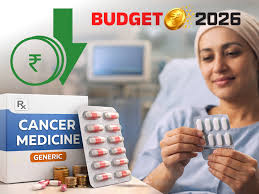
NEW DELHI: In a significant relief to patients, particularly those undergoing cancer treatment, the Union Budget on Saturday proposed a full exemption of basic customs duty on 17 life-saving drugs and medicines, substantially reducing treatment costs and easing the financial burden on affected families.
Union Finance Minister Nirmala Sitharaman also announced the launch of a major scheme, Biopharma SHAKTI, with an outlay of Rs 10,000 crore over the next five years to develop India as a global biopharma manufacturing hub.
With a focus on countering the rising burden of non-communicable diseases such as diabetes, cancer and autoimmune disorders, Sitharaman said that biologic medicines were critical to longevity and improved quality of life at affordable costs.
The strategy will include the creation of a biopharma-focused network with three new National Institutes of Pharmaceutical Education and Research (NIPERs) and the upgradation of seven existing institutes in Mohali (the oldest), Kolkata, Ahmedabad, Hajipur, Guwahati, Rae Bareli and Hyderabad. The scheme will also establish a network of over 1,000 accredited clinical trial sites across the country.
Strengthening mental healthcare in northern India on the lines of National institute of mental health and Neuro Sciences (NIMHANS), Bengaluru, the government has proposed setting up NIMHANS-2 to cater to the region.
“Emergencies expose families, particularly the poor and vulnerable, to unexpected expenditure. We will strengthen and increase these capacities by 50 per cent in district hospitals by establishing Emergency and Trauma Care Centres,” the Finance Minister said.
The Budget also proposed the setting up of five regional medical hubs in partnership with the private sector.
“These hubs will serve as integrated healthcare complexes that combine medical, educational and research facilities. They will have AYUSH centres, Medical Value Tourism Facilitation Centres, and infrastructure for diagnostics, post-care and rehabilitation. These hubs will provide diverse job opportunities for health professionals, including doctors and allied healthcare professionals,” Sitharaman announced.
A major thrust has also been accorded to healthcare infrastructure development under the Pradhan Mantri Ayushman Bharat Health Infrastructure Mission (PM-ABHIM), with an allocation of Rs 4,770 crore.
Recognising the growing healthcare demands arising from an ageing population, the increasing burden of non-communicable diseases, and rising global demand for skilled healthcare professionals, the government proposed a phased outlay of Rs 1,000 crore over three years for the expansion and strengthening of allied healthcare education.
Under this initiative, allied health professional institutes in 10 key disciplines will be set up or upgraded to create nearly one lakh skilled professionals over the next five years through public and private sector participation. In addition, a focused programme will train 1.5 lakh geriatric caregivers to address the rapidly growing long-term care needs of the elderly
Further, the allocation for human resources for health and medical education, including the establishment of new medical colleges, expansion of undergraduate and postgraduate seats, and strengthening of nursing education, has been set at Rs 1,725 crore.
The Budget also provided a significant boost to medical research and innovation under the Department of Health Research, with the allocation for the Indian Council of Medical Research (ICMR), New Delhi, enhanced to Rs 4,000 crore.
Medicines for several rare diseases, including Congenital Hyperinsulinaemic Hypoglycaemia, Familial Homozygous Hypercholesterolaemia, Alpha Mannosidosis, Primary Hyperoxaluria, Cystinosis, Hereditary Angioedema and Primary Immune Deficiency Disorders, have been included for exemption from import duties.