

By: Mohammad Hanief
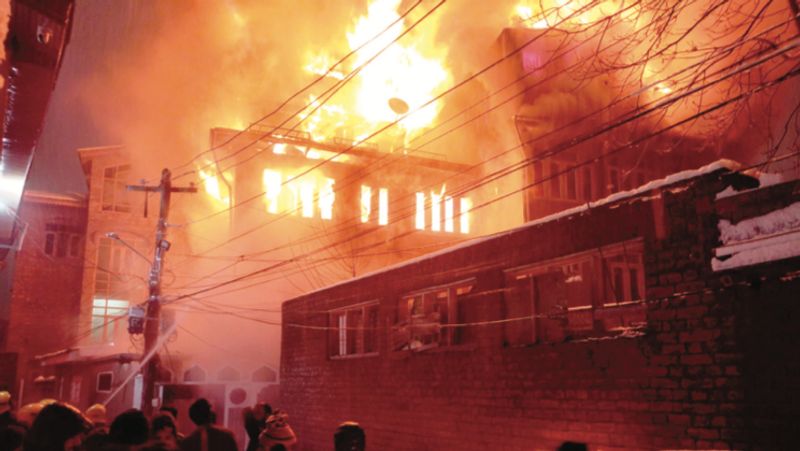
A massive fire that broke out in a scrap yard and an adjoining carpet godown in the Tengpora locality of Srinagar on Tuesday has once again drawn attention to the growing fire hazard confronting the Kashmir Valley this winter. The blaze erupted in a densely populated slum area where scrap material was stored for transportation to recycling factories, quickly spreading to a nearby carpet godown and sending thick plumes of smoke billowing across the neighbourhood. While no casualties were reported, the incident caused extensive damage to property and underscored the potentially catastrophic consequences of unregulated commercial activity in residential zones.
Goods worth several lakhs of rupees were destroyed in the fire. Firefighters described it as a providential escape that several fuel tankers parked on an adjacent plot of land were not engulfed by the flames, a scenario that could have triggered a far larger disaster. Dozens of fire tenders were pressed into service, and firefighting operations continued for several hours before the blaze was brought under control. The cause of the fire was yet to be ascertained.
The Tengpora incident is the latest in a worrying series of fire outbreaks reported across the Kashmir Valley during the ongoing winter season. As the region experiences prolonged cold wave conditions with sub-zero night temperatures, fire and emergency services have remained on constant alert, responding to multiple incidents almost daily. Residential areas, commercial structures and even institutional facilities have all featured among the affected sites, reflecting the breadth of the challenge.
In recent weeks, fire service records indicate a sustained surge in incidents, with several days witnessing seven to eleven separate fire calls across the Kashmir Division. Srinagar has borne a significant share of the burden, particularly its older and more congested neighbourhoods, though north and south Kashmir districts have also recorded repeated emergencies. The frequency of incidents has stretched response capabilities and exposed gaps in infrastructure and preparedness.
One of the most damaging recent residential fires occurred in the Umar Colony area of Lal Bazar in Srinagar, where a multi-storey house was completely gutted during late-night hours. Firefighters managed to prevent the flames from spreading to adjoining structures, but the incident highlighted persistent challenges such as narrow access lanes, delayed response times and limited water availability. Similar conditions prevail in several parts of the city, increasing the risk of rapid fire spread.
Earlier this winter, a major blaze in the Khanyar area of Srinagar’s Nowpora locality damaged multiple adjoining houses, leaving several families without shelter at the height of the cold season. Although there were no reports of casualties, the loss of household goods, winter supplies and personal belongings caused severe hardship. Recovery for affected families has been slow, underscoring the limited financial and institutional support available after such incidents.
Rural areas have also faced serious fire threats. In north Kashmir’s Handwara region, a fire that broke out in a cowshed in the densely populated Chottipura Mohalla threatened nearby residential houses before being brought under control. The fire was reportedly triggered by an electrical fault near a power pole, a factor that has featured repeatedly in investigations into recent incidents. Timely intervention by locals and security personnel prevented wider damage.
Non-residential facilities have not been immune. In Srinagar, a late-night fire at Central Reserve Police Force barracks and adjoining store rooms caused extensive damage to property. The incident reinforced concerns that high electrical loads and ageing infrastructure pose risks even in secured premises during winter.
The primary causes behind the surge in fire incidents remain largely consistent. The severe cold has led to heavy reliance on electric heaters, blowers, cooking stoves and electric blankets, placing unprecedented strain on household electrical systems. Fire officials say a majority of recent incidents have been linked to electrical short circuits, often originating from overloaded sockets, damaged wiring or uncertified heating appliances.
Substandard electric blankets have emerged as a major concern. Widely sold in local markets, many such products lack basic safety mechanisms such as automatic cut-off systems. Continuous overnight use, combined with outdated wiring, has turned these devices into frequent ignition sources, particularly in sleeping areas. Several recent residential fires are believed to have started in bedrooms during late-night hours.
Ageing and poorly maintained electrical infrastructure further compounds the risk. In older neighbourhoods across the Valley, wiring systems installed decades ago are ill-equipped to handle current electricity demand. The problem is exacerbated in congested localities where houses are closely packed, increasing the likelihood that a single spark can quickly escalate into a major blaze.
Firefighting operations continue to face structural and logistical challenges. Narrow roads, encroachments and unauthorised constructions often obstruct the movement of fire tenders, forcing crews to deploy hoses over long distances or rely on portable equipment. Water scarcity in several areas further hampers efforts, prolonging response times and increasing damage.
The human and economic costs of the winter fire surge have been substantial. Families affected by residential fires frequently lose shelter, savings and essential winter supplies, leading to displacement during freezing conditions. For small traders and shop owners, fire damage can erase years of investment, with limited insurance coverage available to absorb the losses.
Beyond material damage, the psychological impact has been profound. The repeated occurrence of fires has heightened anxiety among residents, particularly in densely populated neighbourhoods where evacuation options are limited. Night-time evacuations and the fear of losing one’s home have left a lasting imprint on children and elderly residents.
Authorities have repeatedly urged the public to adhere to basic fire safety measures, including regular inspection of electrical wiring, cautious use of heating appliances and prompt reporting of fire incidents. Fire and emergency officials have stressed the importance of switching off heaters and electric blankets when not in use and avoiding the use of multiple high-load devices on a single connection.
However, experts argue that advisories alone are insufficient. Preventive measures need to be institutionalised through routine electrical safety audits, stricter enforcement against the sale of unsafe heating devices and stronger action against commercial operations functioning illegally in residential areas. The Tengpora fire has once again highlighted the risks posed by such violations.
Urban planning and infrastructure upgrades are equally critical. Improved enforcement of building codes, creation of designated emergency access routes, installation of functional fire hydrants and expansion of fire service infrastructure could significantly enhance response capacity. In rural areas, better access to water sources and basic firefighting equipment could help contain fires in their early stages.
Community participation has played an important role in limiting damage in several recent incidents, with neighbours and volunteers assisting firefighters and helping evacuate affected families. While this reflects social resilience, it also points to gaps in formal emergency preparedness that require urgent policy attention.
As the Valley continues to endure extreme winter conditions, the current scenario suggests that the risk of fire incidents remains high. Electricity demand shows no sign of easing, and ageing infrastructure remains under constant strain. Without coordinated preventive action, the pattern of winter fires risks becoming a recurring seasonal crisis.
The ongoing surge in fire incidents serves as a stark reminder that fire safety is not merely an emergency response issue but a broader challenge linked to urban planning, regulation and public awareness. Addressing it will require sustained investment, effective governance and collective responsibility. As Kashmir navigates another harsh winter, reducing the toll of fire-related disasters must become an urgent and shared priority.
(The author is a senior analyst and can be mailed at [email protected]
X/Twitter: @haniefmha)