

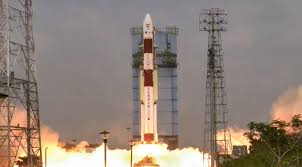
NEW DELHI: Following its lift-off from Satish Dhawan Space Centre, Sriharikota, on Monday, the PSLV-C62 mission encountered an anomaly near the end of the third stage of the launch, ISRO said. A detailed analysis has been initiated to investigate the issue.
“We attempted the PSLV-C62/EOS-N1 Mission. The PSLV is a four-stage vehicle with two solid stages and two liquid stages. The performance of the vehicle up to the end of third stage was as expected, close to the end of the third stage we are seeing little more disturbance in the vehicle roll rates and subsequently there is a deviation observed in the flight path. We are analysing the data and shall come back at the earliest,” ISRO Chairman V Narayanan said.
The EOS-N1 earth observation satellite is said to be built for strategic purposes.
On May 18, 2025, as well, ISRO attempted to launch the EOS-09 satellite aboard PSLV-C61, but the mission could not be accomplished due to anomalies in the third stage of the rocket.
The PSLV-C62/EOS-N1 mission is the ninth dedicated commercial mission undertaken by NewSpace India Limited (NSIL) to build and launch the EOS-N1 satellite for a user, along with providing launch services for 15 co-passenger satellites from domestic and international customers.
This launch will use the PSLV-DL variant with two solid strap-on motors. This mission will be the 64th flight of the PSLV.
Additionally, the mission will demonstrate KID (Kestrel Initial Technology Demonstrator), a small-scale re-entry vehicle prototype from a Spanish startup. The KID will be the last co-passenger to be injected, after which it is slated to re-enter the Earth’s atmosphere towards splashdown in the South Pacific Ocean.
PSLV is the workhorse launch vehicle of ISRO, which has completed 63 flights, including notable missions like Chandrayaan-1, Mars Orbiter Mission, Aditya-L1, and Astrosat. In 2017, PSLV set a world record by launching 104 satellites in a single mission.