

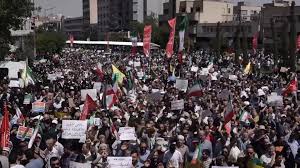
TEHRAN: Large crowds of protesters have marched through Tehran and several other Iranian cities in what observers describe as the largest display of opposition to the clerical establishment in years, according to verified video footage.
Peaceful demonstrations were seen on Thursday evening in the capital Tehran and the northeastern city of Mashhad, Iran’s second-largest city. Videos verified by BBC Persian showed protesters chanting slogans calling for the overthrow of supreme leader Ayatollah Ali Khamenei and the return of Reza Pahlavi, the exiled son of Iran’s last shah, who has urged supporters to take to the streets.
Later that night, internet monitoring group NetBlocks reported a nationwide internet blackout, saying authorities had implemented escalating digital restrictions amid the unrest.
Prominent Iranian activist and journalist Masih Alinejad appealed for international support as the protests entered their twelfth day. Writing on social media platform X, Alinejad said the message of the demonstrators was clear, stating that Iranians “do not want this regime.”
She criticised the internet shutdown and called on tech entrepreneur Elon Musk to help restore connectivity, while also urging US President Donald Trump and the international community to support Iran’s transition to a secular democracy.
Protests have spread across numerous cities, including Borujerd, Arsanjan, Gilan-e Gharb, and Shiraz. Footage from Shiraz showed security forces driving over a protest barricade bearing the message, “We revolt due to hunger.” In Tehran, demonstrators were seen setting fires in the streets as large crowds marched.
The unrest follows warnings from Iran’s Chief Justice, Gholam-Hossein Mohseni-Ejei, who said those involved in protests would face consequences, accusing demonstrators of acting in line with Iran’s enemies. His remarks followed comments by Trump, who warned Tehran against violently suppressing peaceful protests, saying the United States was “locked and loaded.”
Israeli Prime Minister Benjamin Netanyahu also voiced support for the protesters, saying it was possible the Iranian people were “taking their fate into their own hands.”
Iran’s military leadership responded with its own warning. Major-General Amir Hatami said Iran’s armed forces were prepared to respond decisively to any aggression, adding that the country’s military readiness was greater than before last year’s conflict, during which US and Israeli forces bombed Iranian nuclear sites.
NetBlocks said the nationwide internet shutdown severely restricted communication and hindered the public’s ability to share information during the protests.
According to Al Jazeera, the demonstrations were sparked late last month when shopkeepers in Tehran’s Grand Bazaar closed their businesses in protest against the sharp fall of Iran’s rial, amid deepening economic hardship caused by mismanagement and Western sanctions.
While Iranian authorities have not released official casualty figures, rights groups estimate that at least 36 people have been killed and more than 2,000 arrested, figures that Al Jazeera said it could not independently verify.
Supreme Leader Ayatollah Ali Khamenei later said Iran would not “yield to the enemy,” comments that came amid heightened regional tensions following a recent US operation targeting Venezuelan President Nicolas Maduro, a close ally of Tehran.
In an attempt to ease public anger, Iran’s government announced monthly assistance payments of about US$ 7 to help offset rising food prices, a move widely criticised as insufficient.
The New York-based Soufan Center said the protests reflect not only worsening economic conditions but also long-standing public anger over repression and policies that have contributed to Iran’s international isolation.